Dscver The Magic Within
A curated series focused on musicians and creative spaces whose work rewards attention.
If this feels aligned, sign up to be featured.
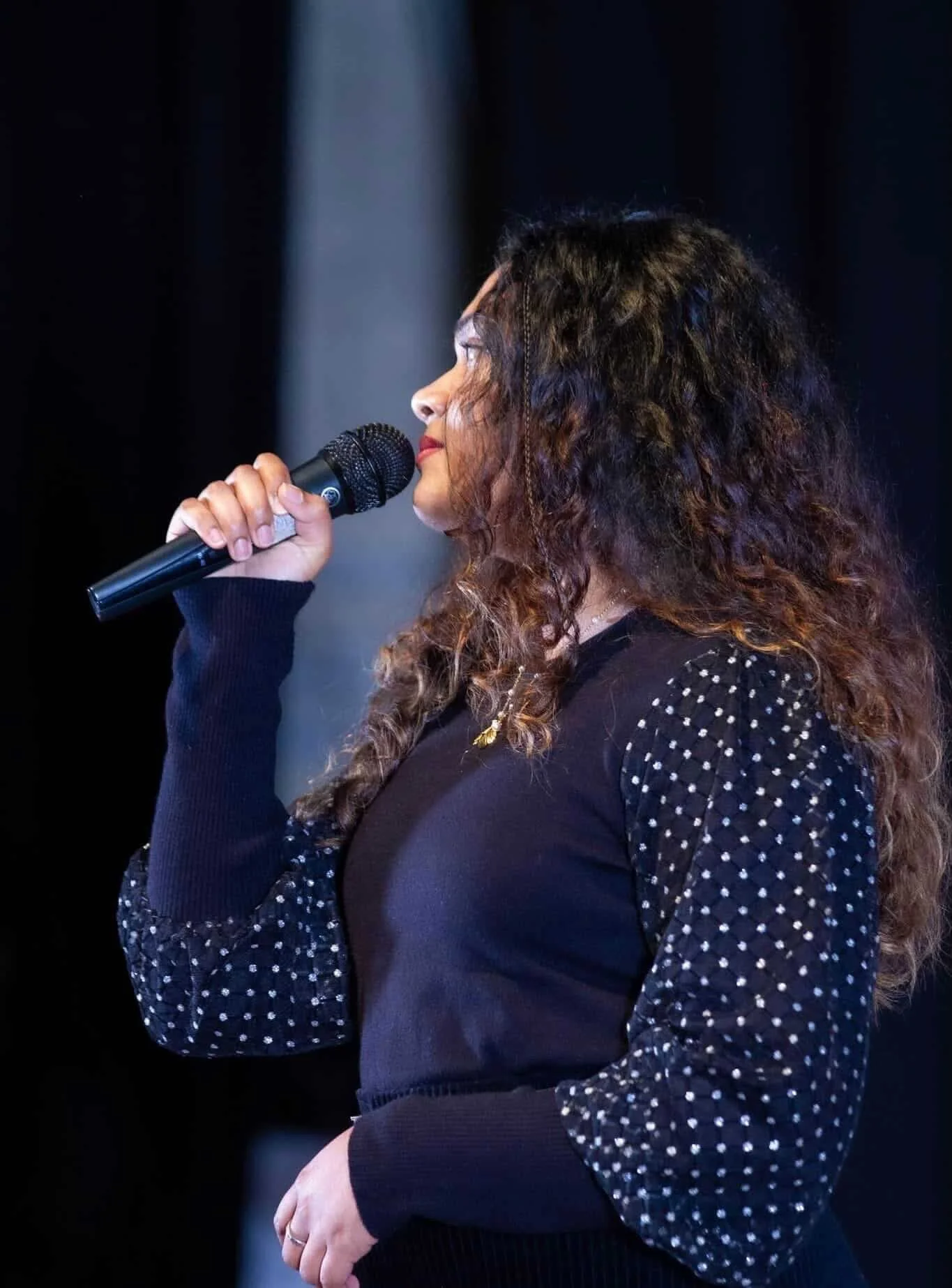
Between Nethmi Sithara’s Lines
Soft But Rooted is a mantra we all try to maintain. Follow up on Nethmi’s testimony to self-growth and awareness. She reveals her next steps in her artistic journey. You wouldn’t want to miss this read!
Soft But Rooted is a goal for a lot of us to maintain this year. Amongst the chaos of the world, many resides in comforting music. Music has healing qualities; as much as the melodies heal the listener, it heals the artist also. Healing isn’t linear and it isn’t fast. It is a journey of the ugly and unexpected, resulting in a flourish and peace within. Nethmi shared Soft But Rooted with the world as a testimony, a sign of hope for others at the beginning of the self-love journey and comfort for those who choose to dwell within it. Rather than just a project of songs, this EP is a story comprised of harmonics that could be considered meditative. Although Nethmi explores and reflects deep truths and sad events, her voice soothes you throughout the EP, reminding the listener that it is all okay. This is not a typical self-discovery project, this is unique, personal, almost whispered, suited for a particular crowd who is keen on self-growth, grounding and self-confrontation. Nethmi’s lyrics weighs heavy and aims for the soul. I had the pleasure of interviewing her to gain perspective of her creative artistry leading up to this point. I dived straight in by presenting the question:
Some people aim for fame, others for expression-only. What did you aim to achieve?
I’ve always aimed for expression first. For me, music is a way to be honest and to connect with people on a deeper level, to help someone through a melody. If my work can make someone feel seen or understood, then I believe I’ve achieved something meaningful. At the same time, I recognise that reaching a wider audience can amplify that impact, so I want to be successful in what I do.
When did music become important in your life?
Music became important to me when I started my first violin lessons. My teacher also introduced me to his choir, as well as vocal training, keyboard, mandolin, and he constantly encouraged me to grow. Through his influence, I began to understand what it truly means to be a musician. When I wrote my first composition with my cousin in 2019 (a Catholic hymn), it brought me so much joy that I began to build confidence in myself and discover my artistic values. Since then, music has been a part of myself.
What is the core meaning of your music?
It’s difficult to define, because a year ago, I was still trying to understand my style and fit it into specific genres. Over time, I’ve realised that my music isn’t about categorisation. At its core, it’s about connecting with the listener, being authentic, speaking my truth, and representing people’s stories through songwriting.
Does your music reflect real-life emotions and circumstances?
Yes, my music has always been a reflection of real-life emotions and circumstances, and I believe it will continue to be so in the future. Coming from a Sri Lankan community, where many people face injustice on a daily basis, it was only after moving to the UK that I began to recognise how deeply rooted discrimination can be in Sri Lanka and across South Asian societies.
My choice of themes is influenced by social media, daily news, and the aftermath of those events, as well as my own lived experiences in Sri Lanka. Observing how women are often disrespected and mistreated, (both in everyday life and online) has strongly influenced me to address these issues through my music. I hope to raise awareness not only within the Sri Lankan community but across wider audiences. For my most recent EP, Soft, but Rooted, I focused more on my personal experiences. This was challenging, as I wasn’t used to writing so openly about my own life, but I realised it was an important step in both my personal growth and my development as an artist.
Last year, May 2025, you performed 5 original pieces that confront deeply rooted social issues in South Asia. How did you begin composing those songs lyrically and sonically?
That performance is something that will always stay with me. I often find it easier to write lyrics based on real stories rather than creating entirely fictional narratives, because it allows me to stay true to my artistic voice. Prior to this, I had already written songs addressing issues such as rape and sexual abuse, and I noticed that audiences began to question and engage with the raw emotions I was trying to convey.
For this performance, I started by selecting topics that are essential to discuss, yet are often dismissed or normalised in South Asian societies. I then researched and wrote down true stories, highlighting key words to build the structure of each song. For example, my first piece focused on child abuse, based on a real incident in Sri Lanka in early 2025. I structured it through different perspectives: verse one from the witness’s point of view, verse two from the victim’s perspective, and the chorus from the ally’s perspective. I also chose to write in both English and Sinhalese. While most of the audience were English speakers, incorporating Sinhalese allowed me to maintain the authenticity of the stories while still creating a strong lyrical connection with the audience.
Sonically, I approached each song differently. One of my main aims was to create a fusion of R&B and South Asian classical music, particularly drawing on Carnatic vocal techniques. I see this blending of genres as a reflection of my journey as an artist. For my fourth piece, which explored the effects of violence against women on mental health, I chose to create a non-lyrical composition. This was both to demonstrate versatility and to represent the voices of women who are often silenced. I wanted the audience to understand the emotional weight of the story without words, using only Carnatic-inspired vocals. The addition of drums was intended to evoke a sense of trauma and act as a warning, symbolising the breaking of silence.
Are you a planned and calculated artist, or do you go with the flow?
I think I’m a combination of both, depending on the situation. I usually plan ahead, I like to set goals, make lists, and create deadlines to maintain consistency in my work. At the same time, I’ve learned to adapt when things don’t go as planned and to make decisions based on what feels right in the moment, while still thinking about the bigger picture. For example, when I released my EP, I had already completed the tracks more than six months earlier. I hadn’t initially planned to release them as a project, but I decided to bring them together as an EP, hoping it would be a meaningful starting point for my artistic journey.
Where do you see yourself heading after your recent EP, Soft but Rooted?
After Soft but Rooted, I see myself continuing to grow both sonically and conceptually. This EP was a starting point for exploring my personal experiences, and moving forward I want to expand that by combining personal storytelling with wider social narratives. I also plan to revisit the songs from my performance last year and release them on streaming platforms. In addition, I aim to release an album before the end of 2026. I’m particularly drawn to exploring the intersection between culture, voice, and identity, especially through blending genres and experimenting with vocal expression. Ultimately, I want to create work that feels both intimate and impactful, while continuing to build and connect with my audience.
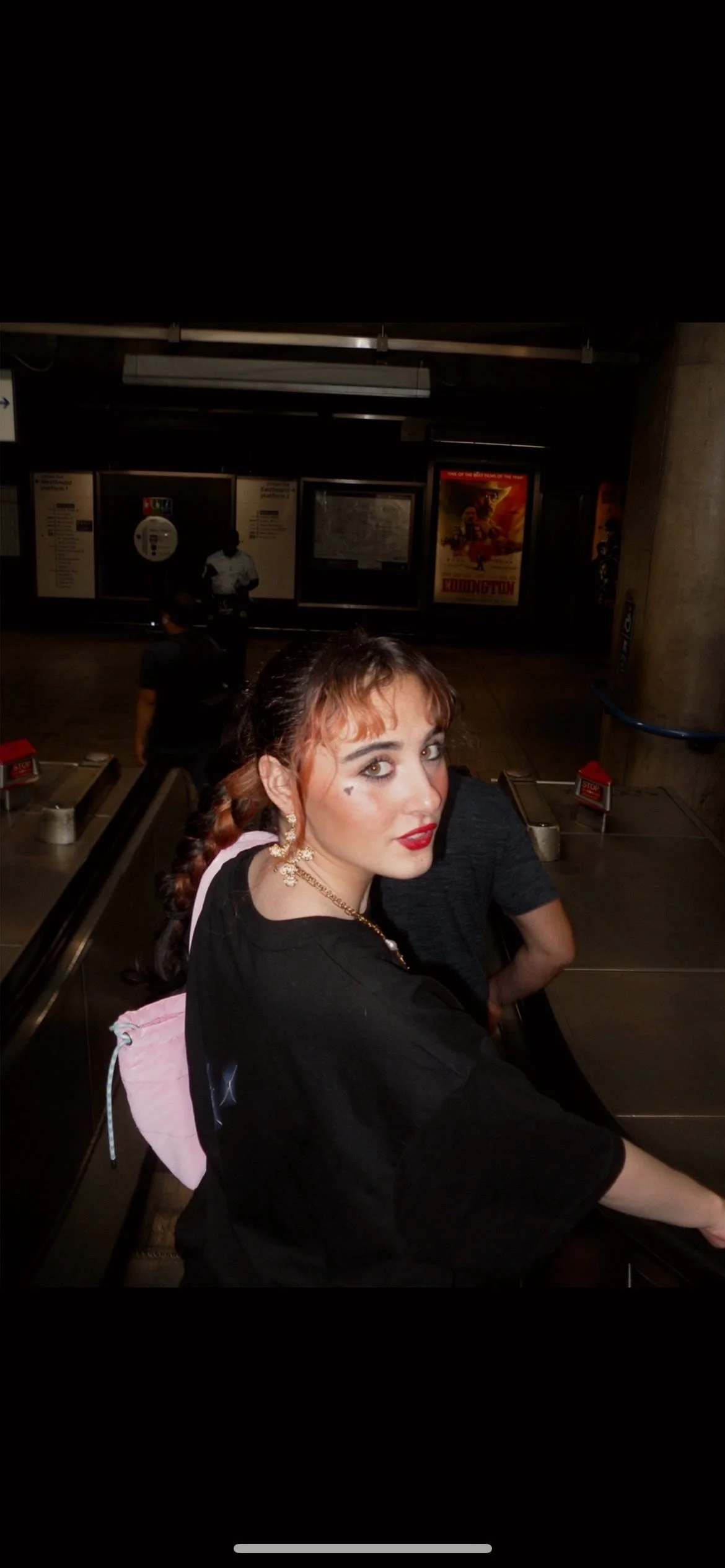
Between Amber Malone’s lines
Raw passion for music is gradually getting hard to come across in times where the music industry could be profitable. There are many independent artists who create great music and blend many genres together, each creating their own flare and immersive world for listeners to dive into. I have discovered a very diverse, creative, personal, genre-bending artist performing at an open mic and was awed at her soothing voice and piercing lyrics. The way she is able to sing a slower melodic and a hyper-pop song whilst still having her identity shining through is impressive. If you need a fresh playlist, then Amber Malone has a catalog that will serve.
Raw passion for music is gradually getting hard to come across in times where the music industry could be profitable. There are many independent artists who create great music and blend many genres together, each creating their own flare and immersive world for listeners to dive into. I have discovered a very diverse, creative, personal, genre-bending artist performing at an open mic and was awed at her soothing voice and piercing lyrics. The way she is able to sing a slower melodic song and a hyper-pop song whilst still having her identity shining through is impressive. If you need a fresh playlist, then Amber Malone has a catalog that will serve.
Since Amber is fluid in multiple genres such as Hyper-pop, Acoustic and RnB, I wondered ‘are each genres reserved for specific emotions and lyrics?’ So naturally, I started listening beyond the instrumental and tuned into her mind; Her state of mind when writing these songs. 1st January 2026, Amber released a single, ‘Care 4 U’, an upbeat RnB song with heavy lyrics describing a past relationship, exploring themes of personal hurt, self-worth and growth. This song impacted me because I can hear both pain and understanding in the lyrics and feel the honesty of being at a crossroad mentally. She poured out her heart on this track. This is my favourite song from her. I had the pleasure of interviewing Amber about herself as an artist, her process behind creating her hits and (ofc) diving behind the lyrics and straight to her thoughts when making Care 4 U. Read onto what Amber has to say:
When did your passion for music and songwriting begin ?
I really can’t remember a time where I wasn’t passionate about it. I used to write songs on the back of my school books. I used to come downstairs as a toddler and perform ridiculous songs and dances to my family. It’s just sort of always been there for me. I guess it’s just how my brain operates.
When you songwrite, do you write before finding the ideal instrumental or the other way around?
Almost always beat first. I freestyle predominantly. I like to let the music speak to my subconscious. To properly feel the music and then go from there. There’s no right or wrong way of doing it when people ask me my process especially when they are new to making music I always make it so clear that it’s literally whatever feels most natural to you personally.
Do you have specific creative period in your day to songwrite?
It completely depends on what’s going on in my life. Even the season impacts it. I could wake up on a hot sunny day and just feel completely creative and productive. Typically in the winter it tends to be evening just because I don’t want to waste the sunlight and it just usually takes me longer to feel that motivation. So a lot of factors go into it to be honest. But overall I’m always freestyling. Always romanticising and I don’t find it hard to find inspiration everywhere.
Do you write based on your life experiences?
Yes, always ! I like to portray the emotion through either past experience or through connection. Everyone has multiple versions within themselves and I really like to play around with that notion. Sometimes writing through someone else’s eyes. I mean you’re a bad guy in someone’s story just as much as you are the centre of someone else’s life.
I noticed you paint and make beautiful art, could you describe your art style and does it connect to your style of music ?
I love any art form to be honest and like most creatives I’ve never been one to box in my internal creativity. Whether it’s writing, painting, music, dance, directing, editing. I feel like creativity is a ball inside of you that builds up and needs a release. I think each avenue has a different form of that. It’s hard to put my self in a particular box for what the style is because it’s genuinely just what I’m feeling when I look at a canvas. Or when I hear a beat.
Care 4 U came out 1st Jan, the song mainly reflects on personal hurt as well as self-worth, love and growth, would you say that those themes are going to be highlighted throughout more songs later this year ?
Conscious thoughts and way of thinking to me is ever evolving. It’s like shape shifting it just never stays the same. At the time I wrote care 4 u I was painfully aware of hearing what you want to hear from someone rather than what they are actually giving you. Almost filling in the blanks to create a picture that saves you from hurt. I went downstairs to my producers room and woke him up at 5am like what beats do you have I need to talk about this. It was something I realised heavily about a situation I was in and everything sort of clicked in to place. I can’t necessarily say it will or won’t come up again. It depends whether that’s a topic that resurfaces within my life or not.
There’s a big power shift in your lyrics between your last single, ‘Feel Nothing’, and ‘Care 4 U’, what was your thought process when moving from one song to the other?
Again there wasn’t really a thought process behind it. It’s more just different versions of my character or rather different phases of the processing stage. One being more vulnerable and numb and the other being slightly more aware. But I have 100s of unreleased songs and feel nothing was made ages ago but it felt right last summer as that feeling resurfaced as I think it does for a lot of young people. Almost feeling directionless and hurt.
You included a short spoken word section in Care 4 U, would you include more sections like that in the future and/or would you create short films based around your music?
I’m a sucker for voicemails, samples, talking etc I think it adds a layer of texture but obviously it’s balance. It’s not right for a lot of songs. But when I feel it is I’m on that straight away. Yes yes and yes I love reading and writing that’s a proper passion of mine and I’ve already started working on some stuff surrounding short films but I won’t speak on that too much yet !
When you write, do you have an elaborate plan per song? like do you create a world around the release or do you let the music speak for itself?
This is a super hard question because I think it’s almost a bit of both and completely dependent on the listener. I could write something that means something to me and someone can listen and mold it to a personal experience that wasn’t how I necessarily intended, I mean that’s the beauty of art I think. I definitely naturally promote the song in the style I see it. So if it’s sad and vulnerable it’s gonna be geared more towards nature shots or solo shots representing that lonely feeling. But I mean you can find loneliness everywhere so even filming in a busy street in London singing emotionlessly can portray that image equally. So yeah I think it’s just a bit of both.
Are you interested in creating concept music?
I think concept music is incredible and again I love to try everything. I’ve made a few unreleased eps that have a complete concept running through the whole thing. However I’m not at a place in my career yet where people are going to fully tap in to that how I’d want them too. So I think timing is a massive element. Right now I’m almost under audition for people. Dropping singles and aiming to catch people who one day will be familiar enough with me that they trust the music enough to really sit and understand a tape.
Calling all independent artists and creative spaces!
Editorial Collaborations & Commissions
InbetweenTheirLines
InbetweenTheirLines is an editorial platform focused on music, creative process, and the spaces that sustain independent culture. We publish both editorial collaborations and paid commissioned features, depending on scope.
Below is an outline of how each works.
Editorial Collaborations
A simple introduction for emerging artists.
What’s included:
* One editorial blog interview
* One artist-provided image
Format:
* 600–800 words
* Written Q&A
* One central editorial angle
Not included:
* Photoshoots
* Creative direction
* Promotional copywriting
* Multiple revisions
* Press-style coverage
One collaboration per artist.
---
Commissioned editorial features
A more considered and structured presentation of your work and perspective.
£30–£60
Pricing reflects the depth of editorial development, including the level of narrative framing, writing, and time spent shaping each feature. Most artists choose features in the £45–£60 range for a more developed editorial.
What’s included:
* Editorial feature
* Interview (written or short recorded conversation)
* Narrative structure and contextual framing
* Edited and published on the platform
Format:
* 700–1,000 words
* Interview-led with light editorial writing
Optional:
Light image capture (select cases only)*
Not included:
* Photoshoots
* Full audio publication
* Long-form essays or deep research
* Creative direction or styling
* Multiple revisions
---
Extended editorial and multi-format features are developed on a limited, project basis.